


KARIMIKUI/ KENYA 200g
KARIMIKUI/ KENYA 200g
Couldn't load pickup availability
99% SL28 & SL34 — Kenya’s Classic Varieties
Coffee grown around Karimikui consists primarily of SL28 and SL34, two of Kenya’s most iconic coffee varieties.
Together, these two varieties account for approximately 99% of the coffee produced in the area.
With their bright acidity, vibrant fruit character, and complexity, SL28 and SL34 create a distinctly Kenyan cup profile.
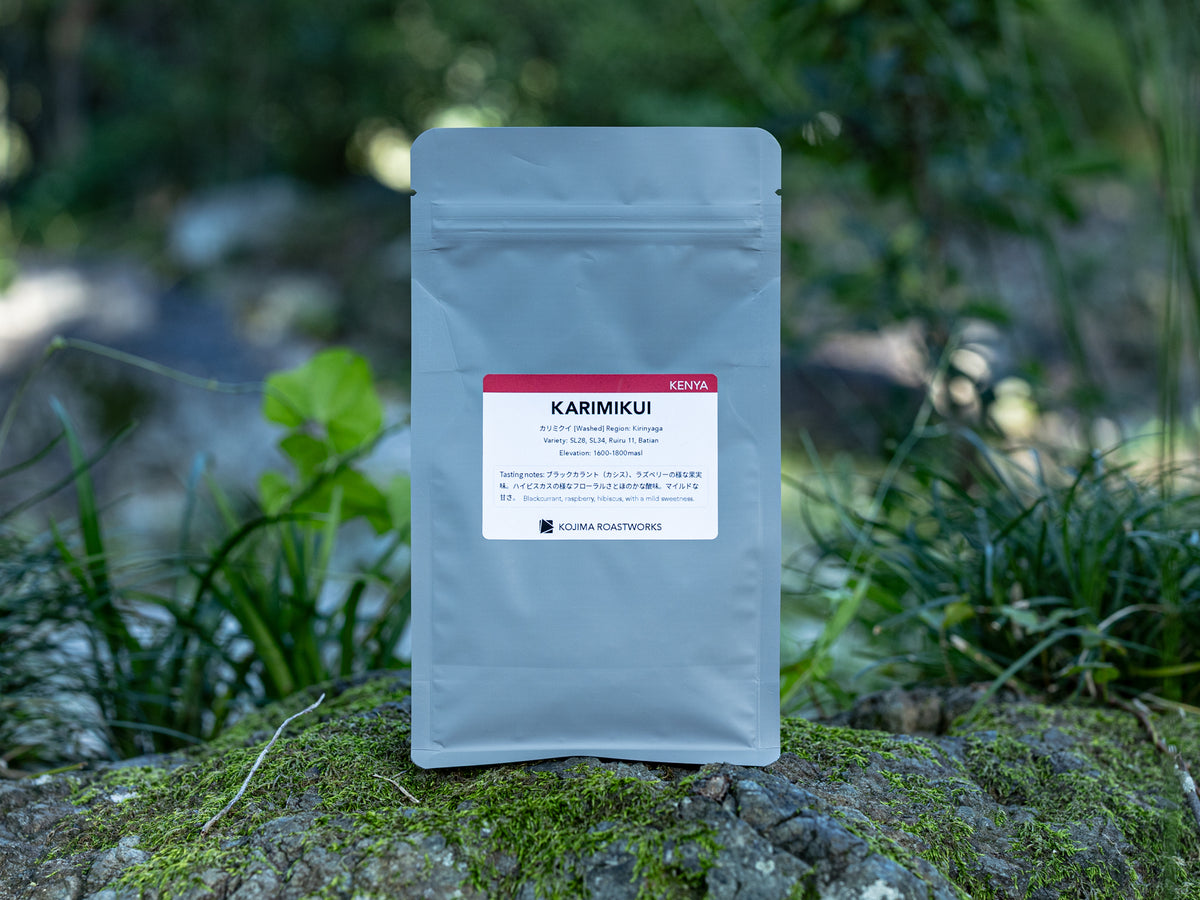
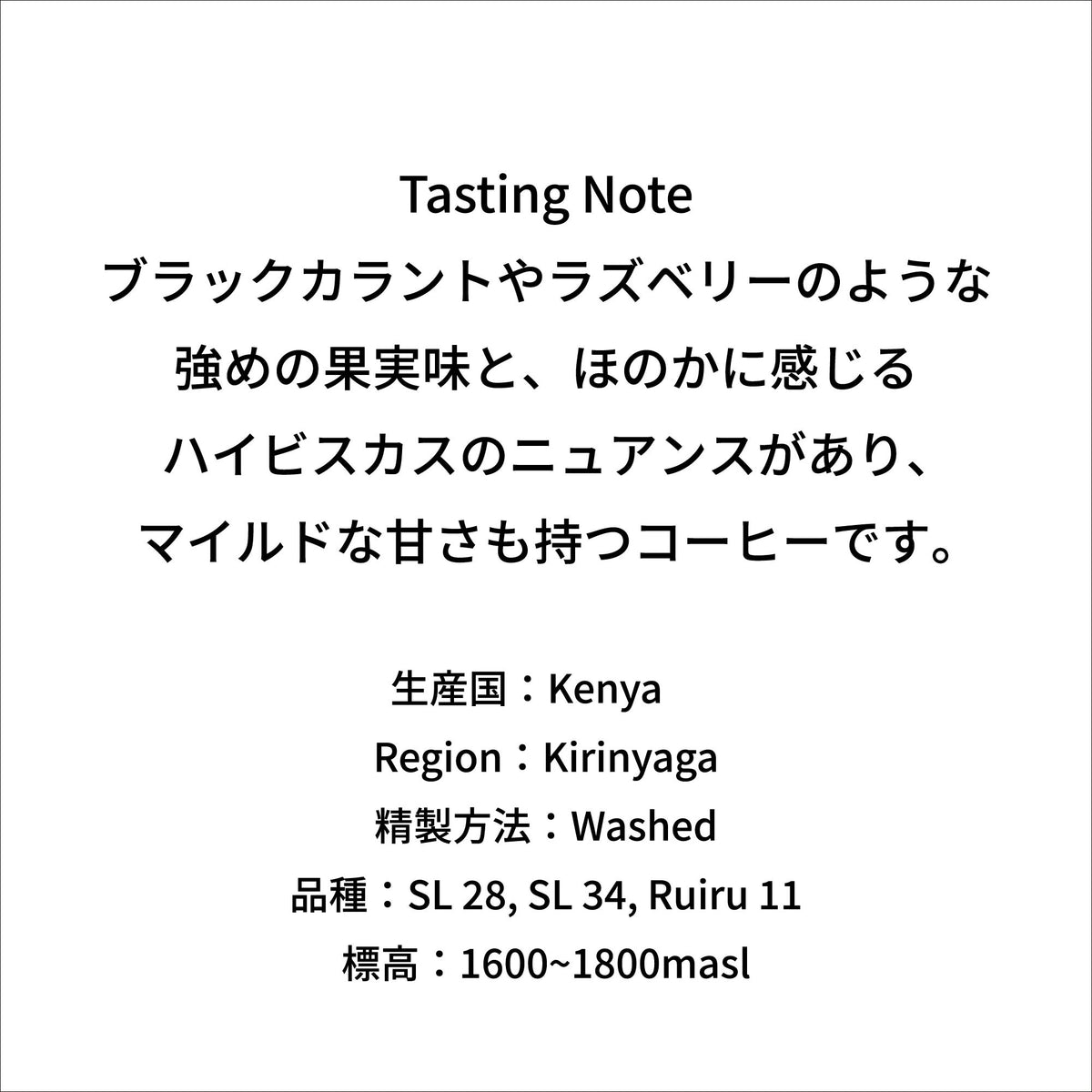
Blackcurrant, raspberry, hibiscus, with a mild sweetness.
Roasted with a profile designed for filter brewing.
Coffee: Karimikui
Cooperative: Rungeto FCS
Region: Kirinyaga
Country: Kenya
Process: Washed
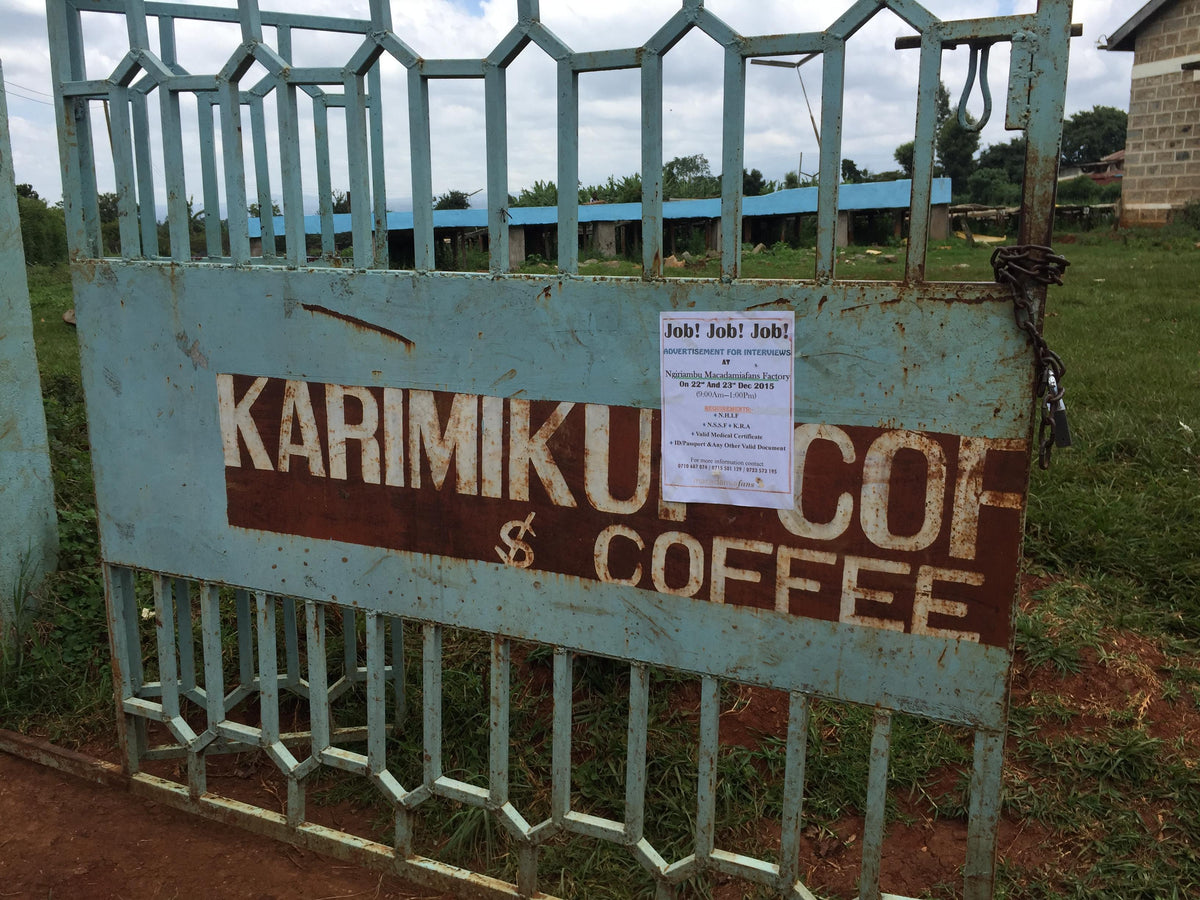
Washing Station: Karimikui Factory
Varieties: SL28, SL34, Ruiru 11
Elevation: 1,600–1,800 masl
Producer Members: 3,200
Net Weight: 200g
Coffee is shipped as whole beans by default.
A Pure Expression of Kenyan Coffee
Karimikui is built around the traditional SL28 and SL34 varieties, shaped by a high-elevation environment and a carefully managed washed process.
Rather than adding character through experimental processing, this coffee focuses on bringing out the inherent qualities of the varieties and terroir through precise processing.
Concentrated fruit character, complex and vibrant acidity, and the distinctive qualities that define great Kenyan coffee.
We hope you enjoy this clear expression of Kenya.
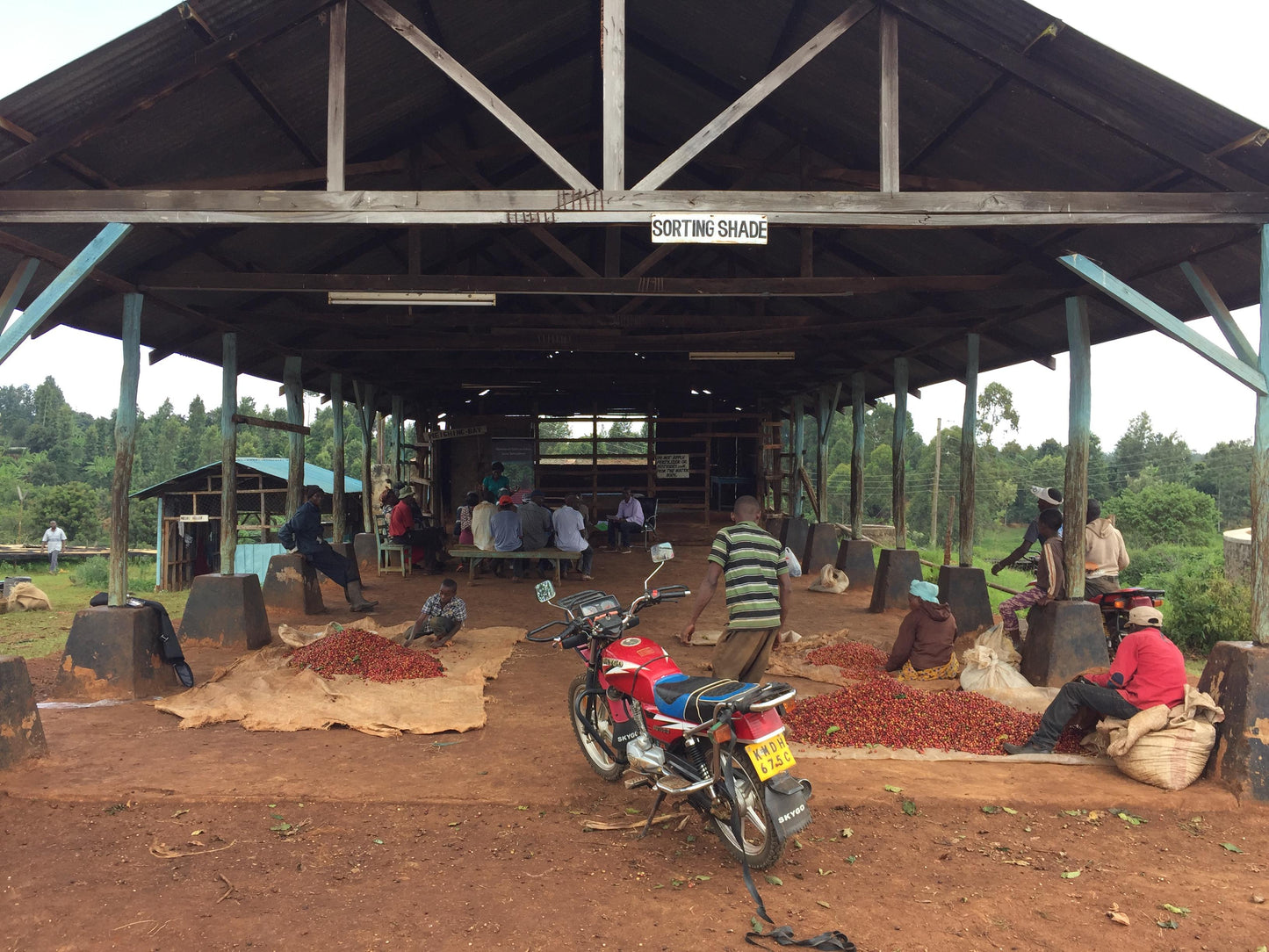
KARIMIKUI FACTORY
Rungeto Farmers Cooperative Society / Kirinyaga, Kenya
Karimikui Factory was established in 1966 and processes coffee grown by smallholder farmers from the three villages of Githureia, Gituba, and Kia Mugumo.
Rungeto Farmers Cooperative Society, which separated from the former Ngiriama Cooperative Society, consists of three factories:
Kii
Kiangoi
Karimikui
SL28 & SL34 — 99% of Production
The primary varieties grown around Karimikui are SL28 and SL34.
Together, these two varieties account for approximately 99% of the coffee produced in the area.
While disease-resistant varieties such as Ruiru 11 have become increasingly common in Kenya, traditional SL varieties remain dominant in this region.
Vibrant acidity, rich fruit character, and complex flavors — SL28 and SL34 are among the key varieties that define the distinctive character of Kenyan coffee.
1,600–1,800m — On the Slopes of Mount Kenya
The coffee is grown at approximately 1,600–1,800 meters above sea level.
Annual temperatures range from around 13–24°C, making this a relatively cool region where tea is also cultivated nearby.
The soil consists of fertile red volcanic soil found throughout the Mount Kenya region.
At this high elevation and under relatively mild conditions, coffee cherries mature slowly, allowing complex flavors to develop.
A Carefully Managed Washed Process
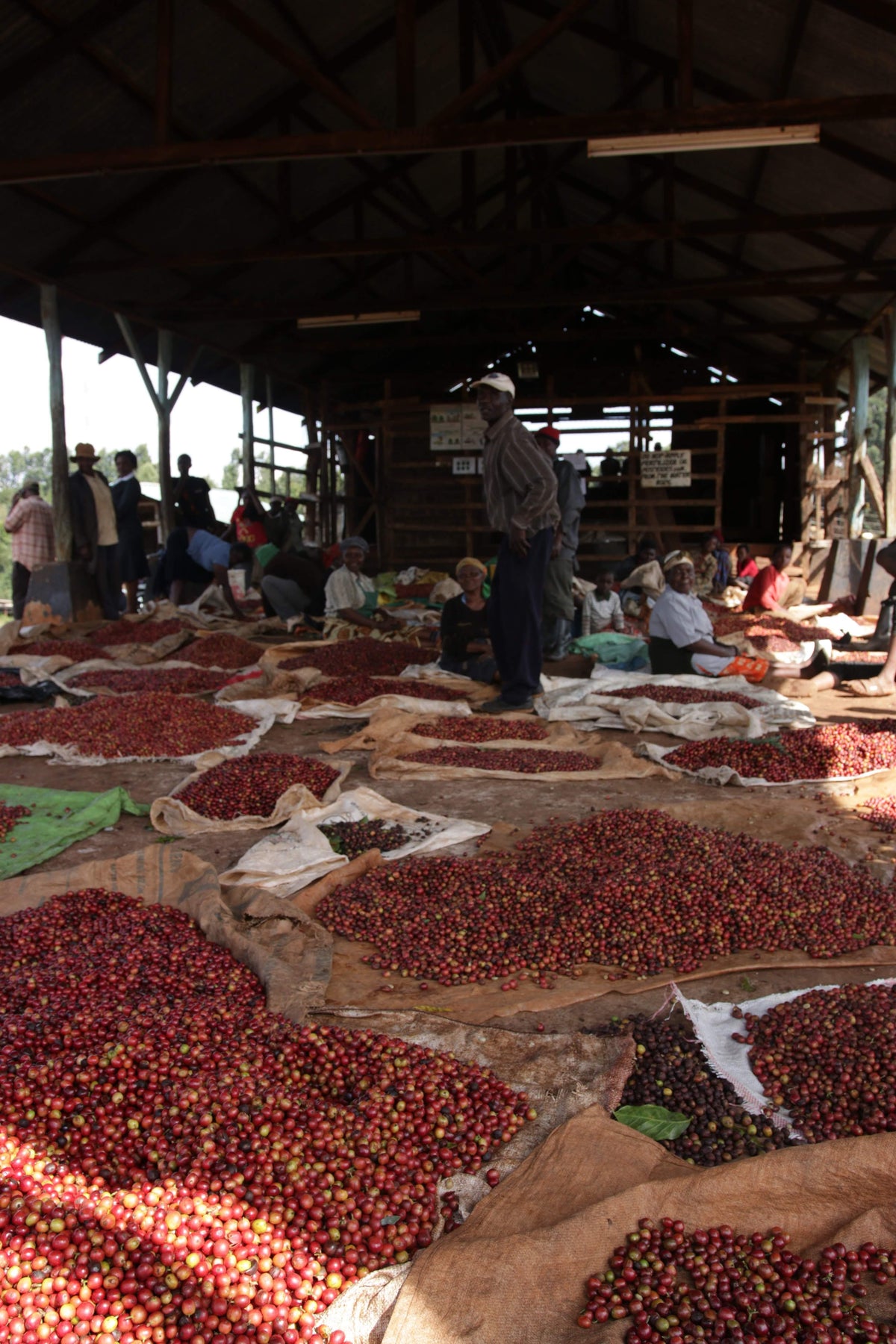
After harvesting, the cherries are sorted and depulped before the parchment coffee is fermented overnight.
The coffee is then washed and graded into:
P1 / P2 / P3 / P lights / pods
After grading, the coffee is dried on raised drying tables for approximately 8–14 days.
Tiled Facilities for a Clean Processing Environment
As part of its quality-control practices, Rungeto Farmers Cooperative Society has introduced tiled surfaces in fermentation tanks and washing channels.
These surfaces are easier to keep clean, helping maintain consistent control throughout the fermentation and washing stages.
Water used during processing is also reused as part of the cooperative’s water-management practices.
Together, these facilities and careful day-to-day management help support the clean cup quality for which Karimikui is known.

Please also see
Extraction method
Official Brew Guide (English)
Here is our in-house pourover recipe used at our roastery. (Updated September 2026)
It may be a bit precise, but we hope you enjoy trying it at home.
Coffee-to-Water Ratio
We use a 1:16 coffee-to-water ratio (1g of coffee to approximately 16g of water).
Examples:
12g coffee : 190g water
15g coffee : 240g water
16g coffee : 260g water
30g coffee : 480–500g water
Equipment Needed
Freshly ground coffee
Dripper
Paper filter
Server / Decanter
Digital scale (for measuring water weight)
Water
Pouring kettle
Timer
Water Temperature
Recommended: ~93°C (199°F)
(Tip: Pouring boiling water into a room-temperature kettle will naturally drop the temperature to around 94°C within 30 to 60 seconds.)
Base Recipe (Single Mug)
Target Yield: ~220–230g of brewed coffee
Coffee Dose: 16g
Total Water Poured: 260g
Step-by-Step Instructions
1. Place the paper filter into the dripper.
2. Rinse the paper filter with hot water to remove any paper taste and preheat your equipment. Discard the rinse water completely.
3. Add 16g of ground coffee into the filter and tap gently to level the coffee bed.
4. Start your timer and begin pouring according to the schedule below:
| Pour | Time | Pour Amount | Total Water |
| 1 (Bloom) | 0:00 | 40g | 40g |
| 2 | 0:40 | 60g | 100g |
| 3 | 1:10 | 60g | 160g |
| 4 | 1:45 | 50g | 210g |
| 5 | 2:15 | 50g | 260g |
・Target Total Drawdown Time: Around 3:00
What to Look For in the Cup
A successful brew will yield a vivid fruitiness backed by rich sweetness, leaving a long, pleasant finish.
(Note: Depending on the bean variety, some coffees may highlight a deeper sweetness over fruitiness, or offer a crisp, clean finish with a shorter lingering aftertaste.)
About aging
Coffee Aging ― The Luxury of Waiting
Do you believe that fresh coffee must be consumed immediately? In reality, coffee has its own ideal moment for optimal flavor—a period known as aging.
Why Coffee Needs Time Freshly roasted beans contain a significant amount of trapped carbon dioxide. When this gas remains, it hinders hot water from properly extracting the soluble compounds, leaving the flavor muffled and blurred.
As the beans slowly degas over days and weeks, the haze clears—revealing the bean’s inherent sweetness and vibrant, clear fruitiness.
Guidelines for Peak Flavor At KRW, we roast our beans thoroughly to the core, condensing their inner flavors. Because of this structure, our coffee requires a slightly longer rest than standard roasts.
• Peak Begins from Day 7 Post-Roast: This is when the aromatics reach their fullest bloom and the body achieves a smooth, velvety texture. The flavor continues to harmonize and deepen through Day 10, Day 15, and beyond.
Storage Rules to Protect the Process To guide the aging process correctly, please keep these two essential habits in mind:
A. Store in a Cool, Dark Place: Oxygen, light, and heat are the main enemies of quality. Keep your beans in their original valved bag or an airtight container, away from direct sunlight.
B. Grind Right Before Brewing: Grinding drastically increases surface area, causing rapid degassing and prematurely ending the aging life. Keep your coffee in whole-bean form as long as possible, and grind only what you need.
Time is the final ingredient that completes a coffee. Enjoy watching its character evolve, day by day, from the date of roast.