


<Preparing>Great Value Set: BANKO GOTITI SSPO (Drip Bag Type) 10-Pack Set
<Preparing>Great Value Set: BANKO GOTITI SSPO (Drip Bag Type) 10-Pack Set
Couldn't load pickup availability
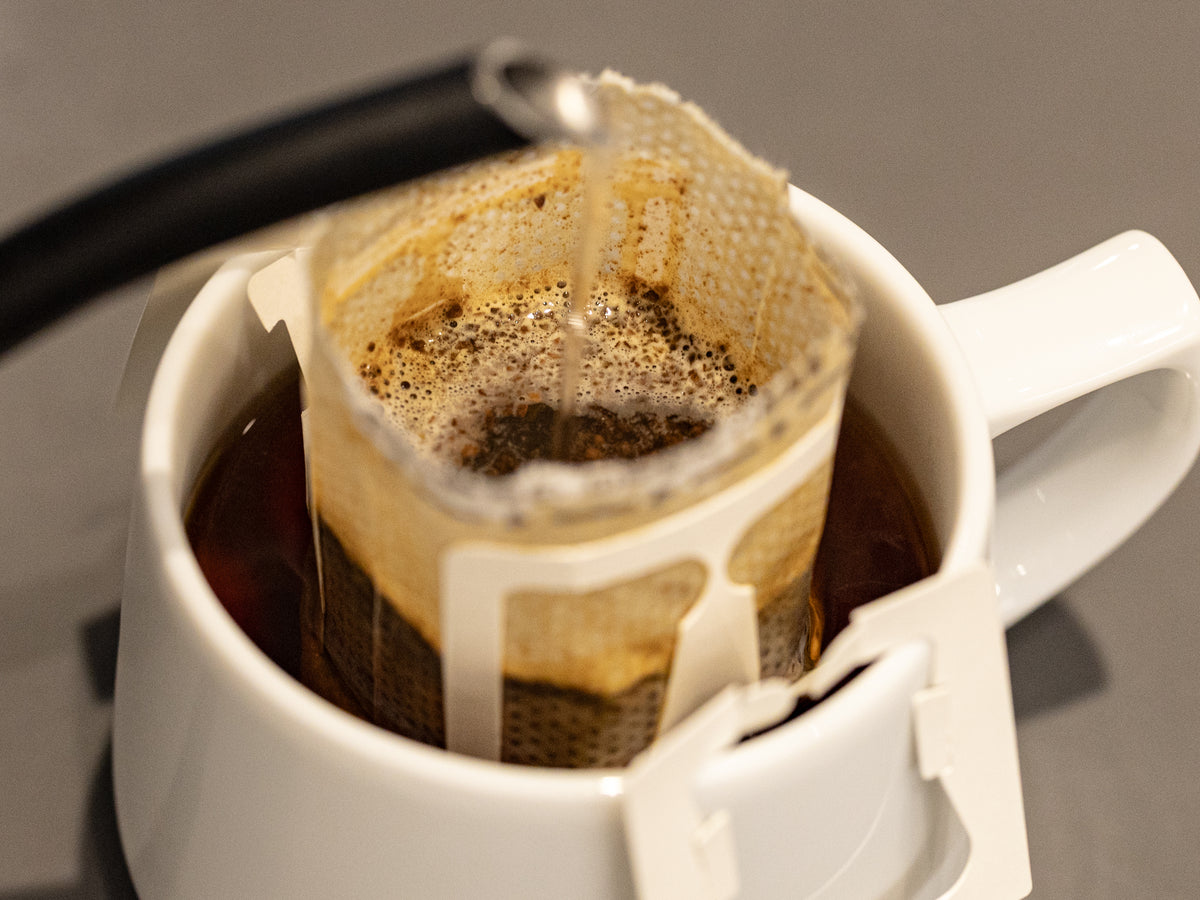
Drip-bag coffee, ready to drink.
This is a great value set of 10.
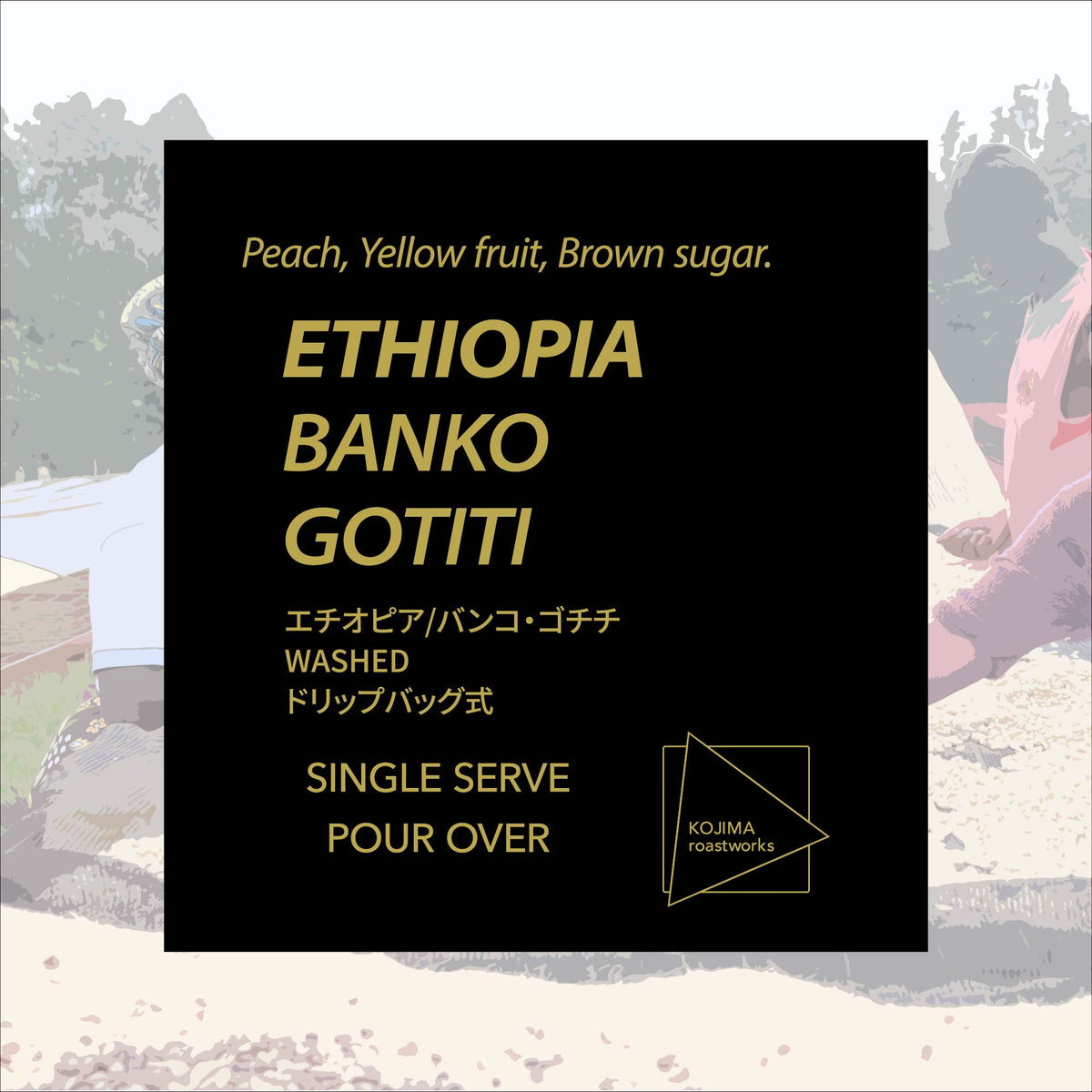
The first half has a bright, fruity taste like plum and nectarine. The latter half has a sweet finish reminiscent of peach, yellow fruit, brown sugar, and black tea.
Coffee Name: Banko Gotiti
Region: Gedeb, Yirgacheffe
Country of Origin: Ethiopia
Processing Method: Washed
Processing Station: Banko Gotiti washing station
Variety: Heirloom
Altitude: 1950 to 2100
14g x 10 bags
Taste Note: Bright fruitiness like plum. Sweetness and lingering aftertaste of peach, yellow fruit, brown sugar, and black tea.
Plum, Peach, Yellow fruit, brown sugar, black tea.
The Appeal of Banko Gotiti Coffee
The finest terroir from the birthplace of coffee.
Ethiopia is the birthplace of coffee, and among its regions, the Yirgacheffe-Gedeb area is known as one of the world's premier production areas.
Banko Gotiti is located in the Gedeo Zone of Gedeb in the Yirgacheffe region, bordering Dimtu Hambella to the north and Guji region to the east and south, giving it a "crossroads" terroir. The significant diurnal temperature range at an ultra-high altitude of 1950 to 2,200m influences the beans, bringing them abundant sugar content and complex flavors.
Quality of Production Management
The operator, Wete Ambela, was established in 2018.
Initially, they were a farmer's agent supplying other exporters through ECX, but as their quality became recognized as a high-quality supplier, they obtained their own export license and established a system for direct export. The founder's wife, Enatenesh, serves as the quality control manager, directly managing both the washing and dry mill processes. Although precise information is currently limited, in the Banko Gotiti area, they collect cherries from thousands of small-scale farmers and also provide training to farmers on harvesting timing and cherry selection to further improve quality.
ECX = Ethiopian Commodity Exchange
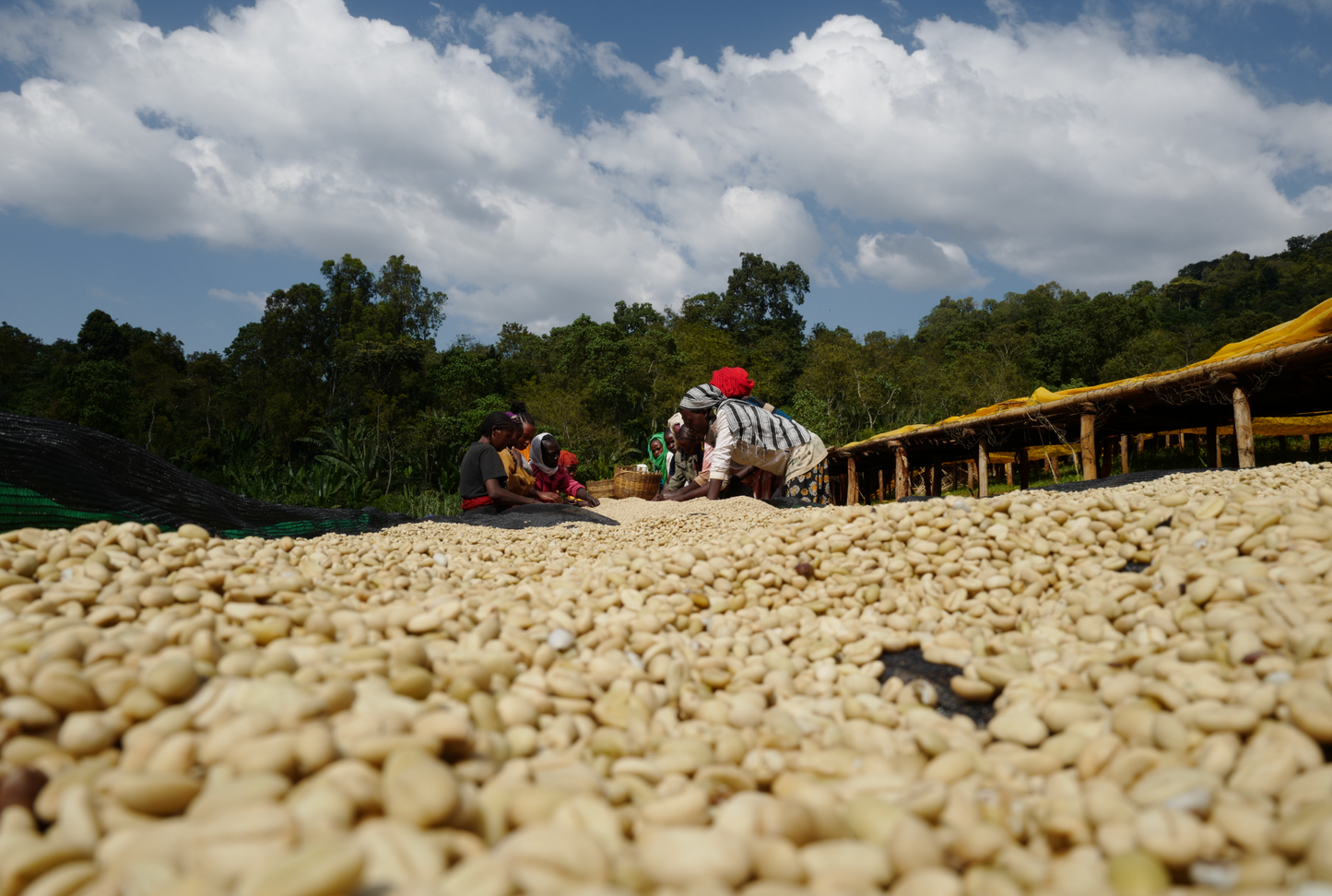
Coffee cherries are cultivated on farms at an altitude of 1950-2100 meters, with each farm typically spanning 1-2 hectares.
Combined, these farms produce approximately 54 tons of coffee annually.
Please also see
Extraction method
Official Brew Guide (English)
Here is our in-house pourover recipe used at our roastery. (Updated September 2026)
It may be a bit precise, but we hope you enjoy trying it at home.
Coffee-to-Water Ratio
We use a 1:16 coffee-to-water ratio (1g of coffee to approximately 16g of water).
Examples:
12g coffee : 190g water
15g coffee : 240g water
16g coffee : 260g water
30g coffee : 480–500g water
Equipment Needed
Freshly ground coffee
Dripper
Paper filter
Server / Decanter
Digital scale (for measuring water weight)
Water
Pouring kettle
Timer
Water Temperature
Recommended: ~93°C (199°F)
(Tip: Pouring boiling water into a room-temperature kettle will naturally drop the temperature to around 94°C within 30 to 60 seconds.)
Base Recipe (Single Mug)
Target Yield: ~220–230g of brewed coffee
Coffee Dose: 16g
Total Water Poured: 260g
Step-by-Step Instructions
1. Place the paper filter into the dripper.
2. Rinse the paper filter with hot water to remove any paper taste and preheat your equipment. Discard the rinse water completely.
3. Add 16g of ground coffee into the filter and tap gently to level the coffee bed.
4. Start your timer and begin pouring according to the schedule below:
| Pour | Time | Pour Amount | Total Water |
| 1 (Bloom) | 0:00 | 40g | 40g |
| 2 | 0:40 | 60g | 100g |
| 3 | 1:10 | 60g | 160g |
| 4 | 1:45 | 50g | 210g |
| 5 | 2:15 | 50g | 260g |
・Target Total Drawdown Time: Around 3:00
What to Look For in the Cup
A successful brew will yield a vivid fruitiness backed by rich sweetness, leaving a long, pleasant finish.
(Note: Depending on the bean variety, some coffees may highlight a deeper sweetness over fruitiness, or offer a crisp, clean finish with a shorter lingering aftertaste.)
About aging
Coffee Aging ― The Luxury of Waiting
Do you believe that fresh coffee must be consumed immediately? In reality, coffee has its own ideal moment for optimal flavor—a period known as aging.
Why Coffee Needs Time Freshly roasted beans contain a significant amount of trapped carbon dioxide. When this gas remains, it hinders hot water from properly extracting the soluble compounds, leaving the flavor muffled and blurred.
As the beans slowly degas over days and weeks, the haze clears—revealing the bean’s inherent sweetness and vibrant, clear fruitiness.
Guidelines for Peak Flavor At KRW, we roast our beans thoroughly to the core, condensing their inner flavors. Because of this structure, our coffee requires a slightly longer rest than standard roasts.
• Peak Begins from Day 7 Post-Roast: This is when the aromatics reach their fullest bloom and the body achieves a smooth, velvety texture. The flavor continues to harmonize and deepen through Day 10, Day 15, and beyond.
Storage Rules to Protect the Process To guide the aging process correctly, please keep these two essential habits in mind:
A. Store in a Cool, Dark Place: Oxygen, light, and heat are the main enemies of quality. Keep your beans in their original valved bag or an airtight container, away from direct sunlight.
B. Grind Right Before Brewing: Grinding drastically increases surface area, causing rapid degassing and prematurely ending the aging life. Keep your coffee in whole-bean form as long as possible, and grind only what you need.
Time is the final ingredient that completes a coffee. Enjoy watching its character evolve, day by day, from the date of roast.